Self-emissive OLED technology providing perfect blacks and ultra-high contrast for immersive visual experience
Get QuotePerfect combination of quantum dot and OLED technology, delivering ultimate color and contrast
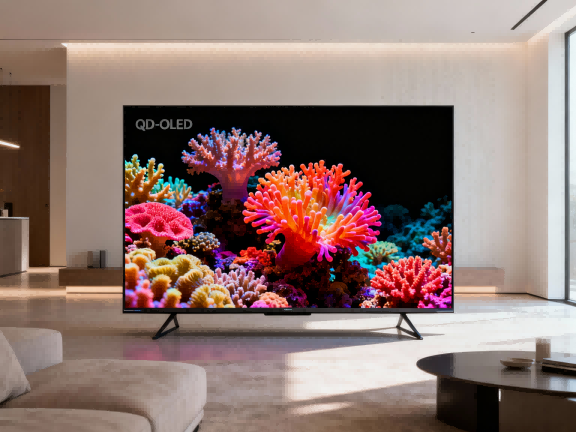
QD-OLED technology combines quantum dot color enhancement with OLED self-emissive advantages, providing unparalleled color performance and perfect blacks. Using blue OLED light source to excite quantum dot materials, it achieves purer colors and higher brightness efficiency.
| Specification | Parameter |
|---|---|
| Color Gamut Coverage | β₯130% sRGB |
| Contrast Ratio | 1,000,000:1 |
| Peak Brightness | 1000-1500 cd/mΒ² |
| Response Time | <1ms |
| Lifespan | β₯50,000 hours |
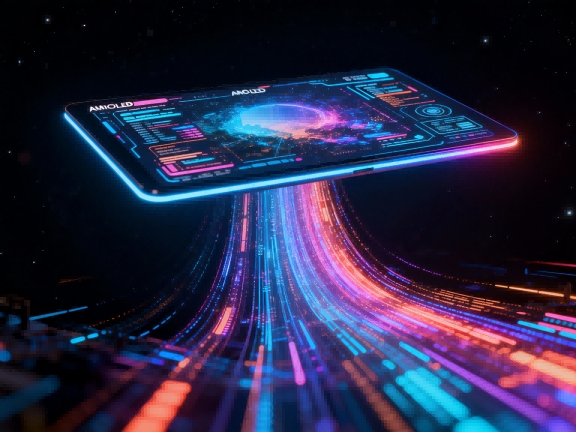
Active Matrix OLED technology, suitable for mobile devices and high-end displays
AMOLED uses active matrix driving technology, with each pixel controlled by an independent thin-film transistor, achieving more precise brightness and color control. With advantages such as ultra-thin design, high contrast, and low power consumption, it is the ideal choice for mobile devices and wearable technology.
| Specification | Parameter |
|---|---|
| Screen Thickness | 0.8-1.2mm |
| Refresh Rate | 60-120Hz |
| Power Consumption | 30-50% lower than LCD |
| Curvature Radius | β₯3mm (flexible version) |
| Pixel Density | 400-800 PPI |
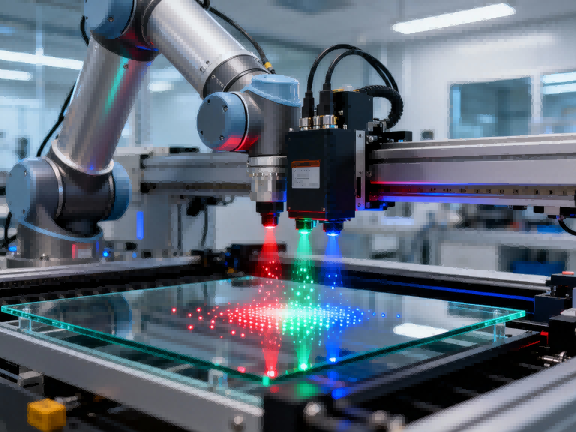
OLED manufactured using printing process, enabling large-size, low-cost production
Printed OLED uses inkjet printing technology to manufacture organic light-emitting layers. Compared to traditional evaporation processes, it offers higher material utilization and lower production costs. Particularly suitable for large-size display manufacturing, it represents an important development direction for future OLED technology.
| Specification | Parameter |
|---|---|
| Maximum Size | β₯100 inches |
| Material Utilization | β₯90% |
| Production Cost | 30-40% lower than evaporation process |
| Resolution | 4K/8K UHD |
| Mass Production Yield | β₯95% |
Understanding the working principle and advantages of OLED display technology
OLED (Organic Light-Emitting Diode) is a self-emissive display technology that requires no backlight module. When current passes through the organic material layers, electrons and holes combine in the light-emitting layer, generating photons and emitting light. Each pixel can be independently controlled for on/off, achieving true pixel-level light control.
OLED technology offers advantages such as infinite contrast ratio, ultra-fast response time, ultra-thin design, wide viewing angles, and flexible display. Compared to traditional LCD technology, OLED provides purer blacks, more vibrant colors, and smoother dynamic images.
OLED technology is widely used in smartphones, televisions, wearable devices, automotive displays, and virtual reality fields. As the technology matures and costs decrease, OLED is becoming the mainstream technology in the high-end display market.
Understand the technical characteristics and suitable applications of different types of OLED displays
| Technology Type | Core Technology | Main Advantages | Suitable Applications | Cost Level |
|---|---|---|---|---|
| QD-OLED | Quantum Dot + OLED | Ultimate color, high brightness | High-end TV, professional monitors | High |
| AMOLED | Active Matrix OLED | Ultra-thin, flexible, low power | Mobile phones, wearable devices | Medium-High |
| Printed OLED | Inkjet Printing Process | Low cost, large size | Large-size TV, commercial displays | Medium |
Please fill out the information below, our sales team will contact you as soon as possible
Address: 15F Innovation Building, High-Tech Park, Shenzhen, Guangdong Province
Email: contact@mavavision.com
Business Hours: Monday - Friday 9:00-18:00